WANT TO SAVE THIS RECIPE?
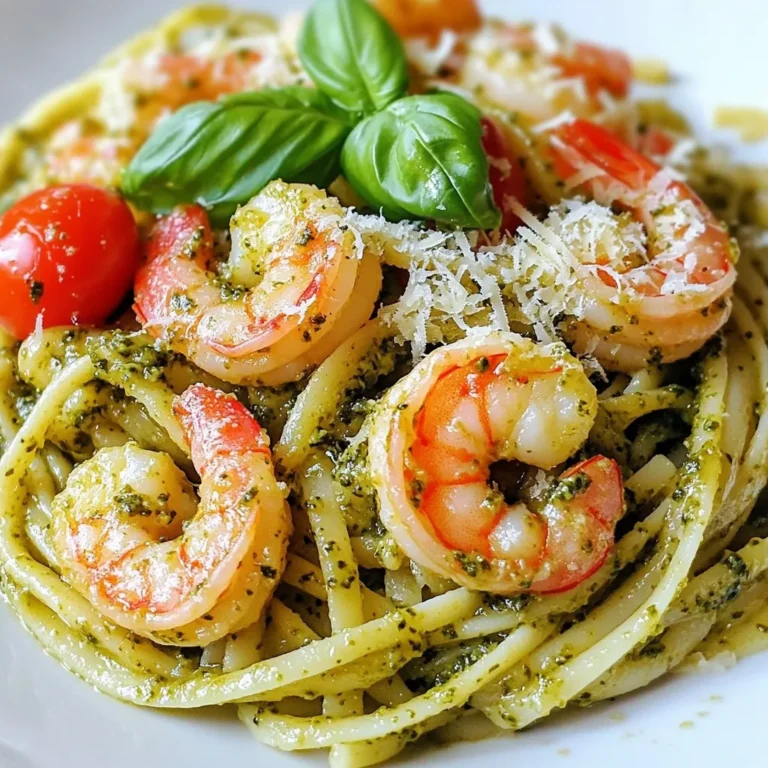
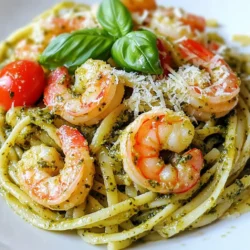
Looking for a simple yet delicious weeknight meal? You’ve hit the jackpot with this Pesto Shrimp Pasta! Quick to make and packed with flavor, it’s a dish that impresses without the fuss. I’ll guide you through each step, share tips for perfect pasta, and offer easy ingredient swaps. Let’s dive into a fresh and tasty recipe that will have everyone asking for seconds!
Why I Love This Recipe
- Quick and Easy: This recipe can be prepared in just 25 minutes, making it perfect for a busy weeknight dinner.
- Fresh Ingredients: The combination of fresh basil pesto and cherry tomatoes brings vibrant flavors and colors to the dish.
- Customizable: You can easily adjust the spice level by adding more or less red pepper flakes, catering to your taste.
- Deliciously Satisfying: The shrimp adds a protein boost, making this pasta dish not only tasty but also filling.
Ingredients
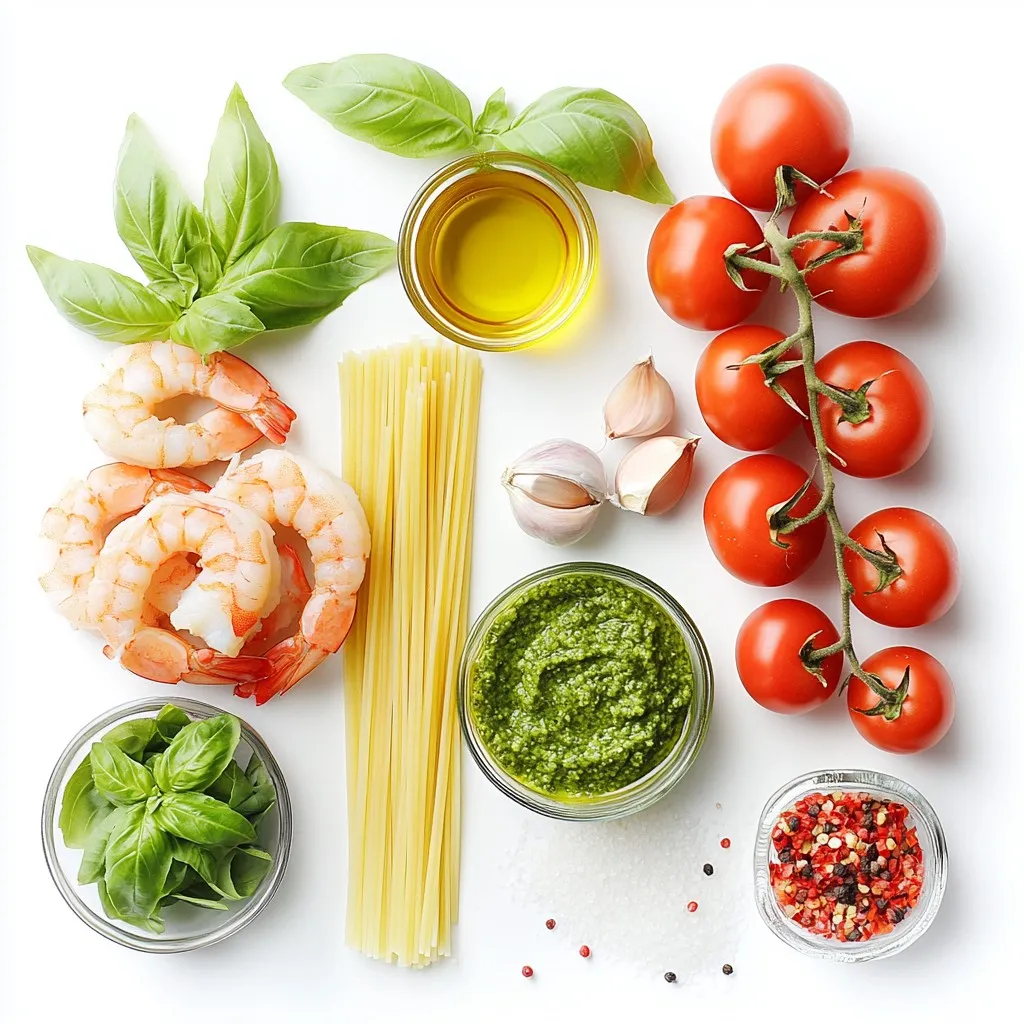
List of Ingredients
– 8 oz linguine or spaghetti
– 1 lb large shrimp, peeled and deveined
– 1 cup fresh basil pesto
– 1 cup cherry tomatoes, halved
– 2 cloves garlic, minced
– 3 tablespoons olive oil
– 1/4 teaspoon red pepper flakes (optional)
– Salt and pepper to taste
– Grated Parmesan cheese for serving
– Fresh basil leaves for garnish
Notes on Ingredient Quality
Using fresh ingredients makes a big difference in taste. Choose shrimp that look moist and have a clean smell. Fresh basil should be vibrant and fragrant. For pasta, I suggest using high-quality brands for the best texture. Fresh garlic packs more flavor than powdered garlic. The pesto should be bright green and made from real basil.
Recommended Brands and Substitutes
For shrimp, I like to use Wild American Shrimp. If you prefer a frozen option, look for shrimp that are raw and peeled. For pesto, brands like Classico or homemade are great. If you need a nut-free option, try sun-dried tomato spread instead of pesto. You can swap linguine for spaghetti or even gluten-free pasta if needed.

Step-by-Step Instructions
Detailed Cooking Process
To make pesto shrimp pasta, follow these steps carefully. First, boil a large pot of salted water. Add 8 oz of linguine or spaghetti. Cook it until it is al dente, about 8-10 minutes. Remember to reserve 1 cup of pasta water before draining. Set the pasta aside.
Next, heat 2 tablespoons of olive oil in a large skillet over medium heat. Add 2 cloves of minced garlic. Sauté it for about 30 seconds until it smells good. Then, raise the heat to medium-high. Add 1 lb of large shrimp, seasoned with salt, pepper, and red pepper flakes if you want some heat. Cook the shrimp for 2-3 minutes on each side. They should turn pink and opaque.
Now, add 1 cup of halved cherry tomatoes to the skillet. Cook them for an extra 2 minutes until they soften. After that, stir in 1 cup of fresh basil pesto. Mix everything well.
Finally, add the drained linguine to the skillet. If the pasta looks dry, add some reserved pasta water until it is creamy. Toss it all together so every strand of pasta gets coated.
Tips for Cooking Perfect Pasta
For perfect pasta, use plenty of water. This helps the pasta cook evenly. Always add salt to the water. It enhances the pasta’s flavor. Stir the pasta occasionally while it cooks. This keeps it from sticking together. Make sure to check the pasta a minute or two before the package time. It should be firm but tender, known as al dente.
Ensuring Shrimp is Cooked Properly
To cook shrimp properly, look for color change. Raw shrimp are grey and translucent. Cooked shrimp should be pink and opaque. They also curl slightly when done. Avoid overcooking; it makes shrimp tough. Cook them just until they reach this perfect state, which usually takes 2-3 minutes per side.
Tips & Tricks
How to Avoid Soggy Pasta
To keep your pasta firm, cook it until it’s al dente. This means it should be slightly firm to the bite. Make sure to boil it in plenty of salted water. Stir it often to prevent sticking. After draining, don’t rinse the pasta. Rinsing removes the starch that helps sauce stick.
Enhancing Flavor with Seasoning
Seasoning is key to making your dish pop. Use salt and pepper well while cooking. A pinch of red pepper flakes adds a nice kick. You can also add fresh herbs like parsley or basil at the end for a burst of flavor. Don’t forget to taste as you go!
Optimal Cooking Times for Shrimp
Shrimp cooks fast, so timing is important. Heat your skillet to medium-high before adding shrimp. Cook them for 2-3 minutes per side. Look for that pink color and opaque look. Overcooking can make shrimp tough, so keep an eye on them.
Pro Tips
- Use Fresh Ingredients: Fresh basil and quality shrimp make a significant difference in flavor. Always opt for fresh over frozen whenever possible.
- Don’t Overcook the Shrimp: Shrimp cooks quickly; overcooking can make it rubbery. Cook just until pink and opaque for the best texture.
- Adjusting Creaminess: If the pasta seems dry, add the reserved pasta water a little at a time to achieve your desired creaminess without making it soupy.
- Garnish for Flavor: A sprinkle of fresh basil and grated Parmesan cheese not only enhances presentation but adds a burst of flavor at the end.
Variations
Vegetarian or Vegan Alternatives
If you want a vegetarian twist, swap the shrimp for mushrooms. Use hearty types like portobello or cremini. For a vegan option, choose plant-based pesto. Look for brands that don’t use cheese. You can also blend your own with basil, nuts, and nutritional yeast. This keeps the fresh taste while making it plant-friendly.
Adding Additional Proteins
You can boost this meal by adding more proteins. Chicken works well; just grill or pan-sear it first. Tofu is another great option. Cut it into cubes and sauté until golden. Scallops or even crab can bring a fancy touch. Just be mindful of cooking times to avoid overcooking anything.
Different Pasta Options
While I love linguine or spaghetti, you can get creative with pasta shapes. Penne or fusilli hold sauces nicely too. If you want a gluten-free meal, try chickpea or lentil pasta. Whole wheat pasta adds fiber and a nutty taste. Just ensure you adapt cooking times for different types.
Storage Info
How to Store Leftovers
To store your leftover pesto shrimp pasta, let it cool first. Use an airtight container. Keep it in the fridge for up to three days. Make sure it’s sealed tightly to keep flavors fresh.
Reheating Instructions
When you’re ready to enjoy your leftovers, reheat them gently. Use a skillet over low heat. Add a splash of water or olive oil to keep it moist. Stir well until heated through. You can also microwave it in short bursts. Heat for 30 seconds, then check and stir.
Freezing Pesto Shrimp Pasta
You can freeze pesto shrimp pasta for later. Pack it in a freezer-safe container. Leave some space at the top, as it will expand when frozen. It can last for up to three months in the freezer. To use, thaw it in the fridge overnight and reheat as mentioned above.
FAQs
What can I substitute for basil pesto?
If you don’t have basil pesto, try using sun-dried tomato pesto or arugula pesto. Both add a unique twist to your dish. You can also make a simple herb blend with parsley, garlic, and walnuts. Mix these with olive oil for a fresh taste.
Can I use frozen shrimp for this recipe?
Yes, you can use frozen shrimp! Just make sure to thaw them first. Place them in cold water for about 15 minutes. This will help them cook evenly and taste fresh.
How do I make this dish spicier?
To add heat, sprinkle in more red pepper flakes. You can also add diced jalapeños or a few drops of hot sauce. Start small, then taste as you go.
What wine pairs well with Pesto Shrimp Pasta?
A crisp white wine, like Pinot Grigio or Sauvignon Blanc, works great. These wines enhance the flavors without overpowering the dish. If you prefer red, a light Pinot Noir is a good choice too.
This blog post covered essential ingredients, tips, and cooking steps for Pesto Shrimp Pasta. You learned about ingredient quality and the best brands to use. I shared cooking tips to avoid soggy pasta and ensure shrimp is cooked just right. Variations allow you to adjust the dish to your taste, whether you want vegetarian options or different pasta types. Finally, proper storage and reheating help maintain flavor and texture. Enjoy making this pasta dish, and feel free to get creative with i
Pesto Shrimp Pasta Delight
A delicious pasta dish featuring shrimp, basil pesto, and cherry tomatoes.
Prep Time 10 minutes mins
Cook Time 15 minutes mins
Total Time 25 minutes mins
Course Main Course
Cuisine Italian
Servings 4
Calories 450 kcal
- 8 oz linguine or spaghetti
- 1 lb large shrimp, peeled and deveined
- 1 cup fresh basil pesto
- 1 cup cherry tomatoes, halved
- 2 cloves garlic, minced
- 3 tablespoons olive oil
- 1/4 teaspoon red pepper flakes (optional)
- to taste Salt and pepper
- for serving Grated Parmesan cheese
- for garnish Fresh basil leaves
In a large pot of salted water, bring to a boil. Add the linguine and cook according to package instructions until al dente. Reserve 1 cup of pasta water, then drain the pasta and set aside.
In a large skillet, heat 2 tablespoons of olive oil over medium heat. Add the minced garlic and sauté for about 30 seconds until fragrant.
Increase the heat to medium-high, add the shrimp to the skillet, and season with salt, pepper, and red pepper flakes (if using). Cook for 2-3 minutes on each side, or until the shrimp are pink and opaque.
Add the cherry tomatoes to the skillet, cooking for another 2 minutes until they are slightly softened. Then, stir in the prepared basil pesto, and mix to combine.
Add the cooked linguine to the skillet with the shrimp and pesto mixture. If the pasta looks dry, gradually add in some reserved pasta water until the desired creaminess is achieved.
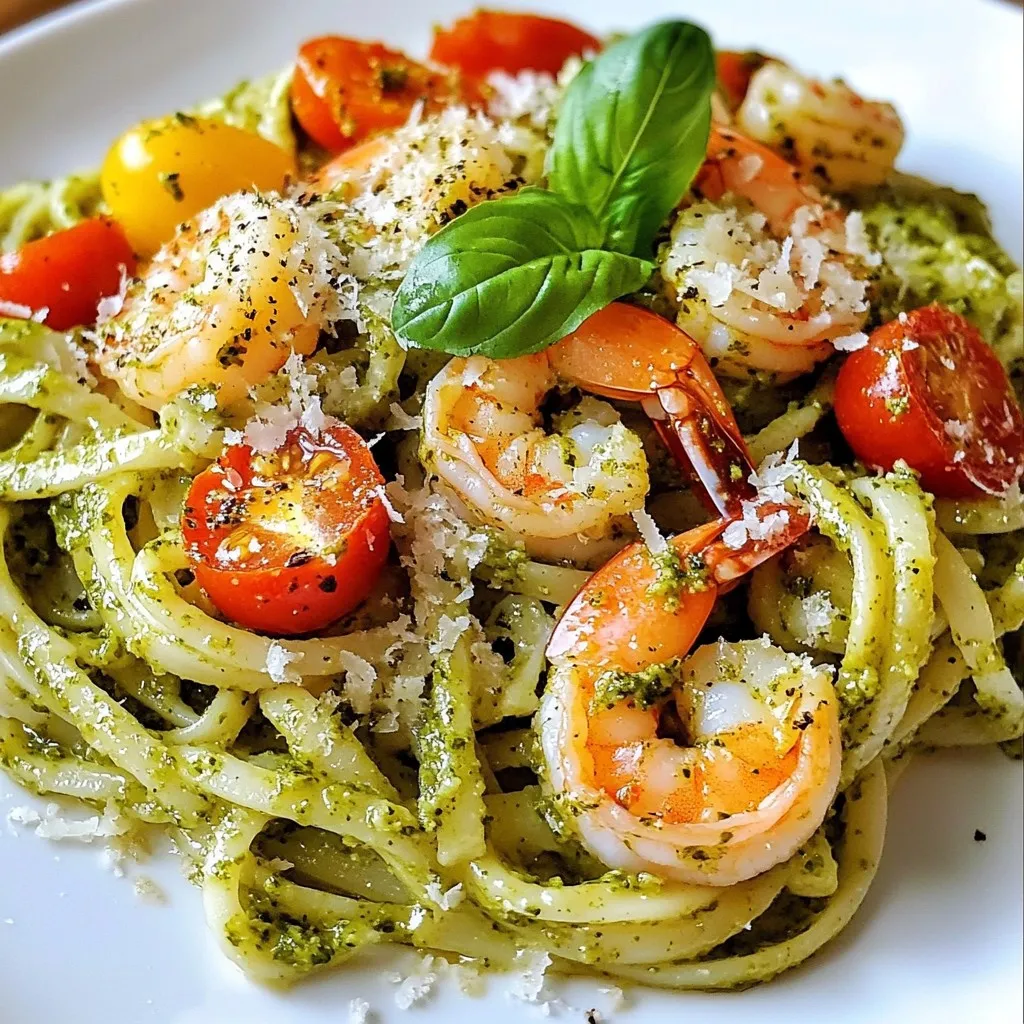
Remove the skillet from heat, and serve the pasta immediately topped with grated Parmesan cheese and fresh basil leaves.
Feel free to adjust the spice level by adding more or less red pepper flakes.
Keyword pasta, pesto, quick meal, shrimp
WANT TO SAVE THIS RECIPE?