Go Back
- 4 salmon fillets - 1/4 cup pure maple syrup - 2 tablespoons soy sauce (or coconut aminos for a gluten-free option) - 1 tablespoon Dijon mustard - 2 cloves garlic, minced - 1 tablespoon fresh ginger, grated - 1 tablespoon olive oil - Salt and pepper to taste - Fresh chives or parsley for garnish Using fresh ingredients makes a big difference. Fresh salmon gives you the best taste and texture. Look for bright, moist fillets. Fresh herbs like chives or parsley add flavor and color. Quality maple syrup is key to a rich glaze. It should be pure and not mixed with corn syrup. Fresh garlic and ginger pack a flavorful punch and enhance the dish. Always choose organic when possible for better taste. Salmon is a fantastic source of protein and omega-3 fatty acids. It supports heart health and brain function. Maple syrup provides natural sweetness with antioxidants. Soy sauce adds flavor but can be high in sodium. If you're gluten-free, coconut aminos is a great alternative. Garlic and ginger have anti-inflammatory benefits. They add flavor and boost your health too. Overall, this dish is both tasty and nutritious. {{ingredient_image_1}} To start, gather your ingredients. In a small bowl, whisk together these items: - 1/4 cup pure maple syrup - 2 tablespoons soy sauce - 1 tablespoon Dijon mustard - 2 cloves garlic, minced - 1 tablespoon fresh ginger, grated Mix them well. This blend will serve as both your marinade and glaze. The sweetness from the maple syrup pairs perfectly with the savory soy sauce. The garlic and ginger add a nice kick. Next, take your four salmon fillets. Place them in a shallow dish. Pour half of the maple glaze over the salmon. Make sure each fillet is well coated. Let the salmon marinate for at least 30 minutes. If you have time, marinate for up to 2 hours. This will deepen the flavors and make your salmon taste amazing. Now, it’s time to cook. Preheat your oven to 400°F (200°C). In a large, oven-safe skillet, heat 1 tablespoon of olive oil over medium heat for one minute. Remove the salmon from the marinade. Discard the leftover marinade. Season both sides of the fillets with salt and pepper. Place the salmon skin-side down in the hot skillet. Sear for 2-3 minutes until the skin gets crispy. Carefully flip each fillet to sear the other side for one more minute. Drizzle the rest of the maple glaze over the salmon. Then, move the skillet to the oven. Bake for 10-12 minutes. Your salmon is done when it flakes easily with a fork. After baking, let the salmon rest for a minute. Garnish with fresh chives or parsley to add a pop of color. Enjoy your delicious maple glazed salmon! To cook salmon just right, look for a few key signs. First, choose thick fillets; they cook evenly. Sear the skin until it is crispy, about 2-3 minutes. Then, flip and bake. The salmon should flake easily when done. Use a fork to test. If it breaks apart, it’s ready. You can boost the glaze with simple tweaks. Add a pinch of red pepper flakes for heat. This gives a nice contrast to the sweet maple. Try mixing in lemon juice for brightness. Fresh herbs like dill or cilantro can add depth. Remember to balance flavors for the best taste. Using the right tools makes cooking easier. A non-stick skillet helps prevent sticking. An oven-safe skillet is great for searing and baking. A good fish spatula makes flipping easy. Also, have measuring spoons handy for precise amounts. Finally, a fork for testing doneness is a must! Pro Tips Tip Title: Marinate for Maximum Flavor: The longer you marinate the salmon, the more intense the flavors will be. Aim for at least 30 minutes, but for the best results, marinate for up to 2 hours. Tip Title: Achieving Crispy Skin: Ensure the skillet is hot enough before adding the salmon. Searing the skin-side first helps to create a crispy texture that enhances the dish. Tip Title: Check for Doneness: Salmon is perfectly cooked when it flakes easily with a fork. Use a fork to test the thickest part of the fillet to ensure it’s done without overcooking. Tip Title: Fresh Herbs for Garnish: Adding fresh herbs like chives or parsley not only brightens the dish visually but also adds a fresh flavor that complements the rich maple glaze. {{image_2}} You can easily make this dish gluten-free. Swap out soy sauce for coconut aminos. This option tastes great and keeps the glaze rich. Always check labels for any hidden gluten. While pure maple syrup is best, other sweeteners work too. Honey adds a nice floral taste. Agave nectar is another option with a mild flavor. If you want a lower-calorie choice, try a sugar substitute. Each sweetener gives the glaze a unique twist. Feel free to customize the glaze with extra flavors. A splash of orange juice brightens the dish. Adding a pinch of red pepper flakes gives it some heat. If you love herbs, try fresh thyme or rosemary for an earthy taste. Experimenting keeps your meals exciting and delicious! To keep your maple glazed salmon fresh, first let it cool. Place the salmon in an airtight container. Make sure to cover it well to stop air from getting in. You can also wrap it tightly in plastic wrap. This helps preserve the flavor and moisture. When stored properly, maple glazed salmon lasts about 3 days in the fridge. If you want to keep it longer, freeze it. In the freezer, it can last up to 3 months. Just remember to label the container with the date. This way, you know how long it has been stored. To reheat your salmon, you can use the oven or microwave. For the oven, preheat it to 350°F (175°C). Place the salmon on a baking sheet and cover it with foil. Heat for about 10 minutes or until warm. If you use a microwave, put the salmon on a microwave-safe plate. Heat it in short bursts, about 30 seconds at a time. Check often to avoid overcooking. Reheating slowly helps maintain the taste and texture. You can tell when salmon is cooked by checking its color and texture. Cooked salmon turns from a translucent red to an opaque pink. Use a fork to flake the salmon gently. If it flakes easily and is just opaque, it is done. The internal temperature should reach 145°F (63°C) for safe eating. Yes, you can use frozen salmon for this recipe. Just make sure to thaw it properly before cooking. Place the frozen salmon in the fridge overnight or submerge it in cold water for faster thawing. This will help the salmon cook evenly. Many side dishes go well with maple glazed salmon. Here are a few great options: - Steamed broccoli - Roasted asparagus - Garlic mashed potatoes - Quinoa salad - Sautéed spinach These sides balance the sweetness of the glaze and add healthy nutrients to your meal. You learned how to make tasty maple glazed salmon. We covered fresh ingredients, easy steps, and useful tips. You can change the recipe to fit your needs and store leftovers safely. Remember, cooking salmon should be simple and fun. With a few tricks, you can impress anyone at your table. Enjoy the rich flavor and health benefits this dish brings to your meals! Happy cooking!

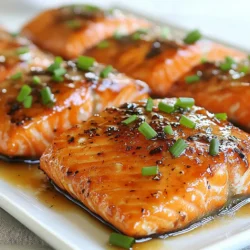
Maple Glazed Salmon

A delicious salmon dish glazed with a sweet and savory maple syrup marinade.
Prep Time 10 minutes
Cook Time 32 minutes
Total Time 42 minutes
Course Main Course
Cuisine American
Servings 4
Calories 300 kcal

Ingredients
  

  • 4 fillets salmon
  • 0.25 cup pure maple syrup
  • 2 tablespoons soy sauce
  • 1 tablespoon Dijon mustard
  • 2 cloves garlic, minced
  • 1 tablespoon fresh ginger, grated
  • 1 tablespoon olive oil
  • to taste salt and pepper
  • for garnish fresh chives or parsley

Instructions
 

  • In a small bowl, whisk together the maple syrup, soy sauce, Dijon mustard, minced garlic, and grated ginger until well combined. This will be your marinade and glaze.
  • Place the salmon fillets in a shallow dish and pour half of the maple glaze over them, ensuring they are well coated. Let the salmon marinate for at least 30 minutes (or up to 2 hours in the refrigerator for a deeper flavor).
  • Preheat your oven to 400°F (200°C).
  • In a large oven-safe skillet over medium heat, add the olive oil and heat for 1 minute.
  • Remove the salmon from the marinade (discard the marinade) and season the fillets with salt and pepper on both sides. Place the salmon skin-side down in the skillet. Sear for about 2-3 minutes until the skin is crispy.
  • Carefully flip each fillet to sear the other side for an additional minute.
  • Drizzle the remaining maple glaze over the salmon fillets and transfer the skillet to the preheated oven. Bake for 10-12 minutes, or until the salmon is cooked through and flakes easily with a fork.
  • Remove from the oven and let the salmon rest for a minute.
  • Garnish with freshly chopped chives or parsley before serving.

Notes

For a gluten-free option, use coconut aminos instead of soy sauce.
Keyword gluten free, maple syrup, salmon