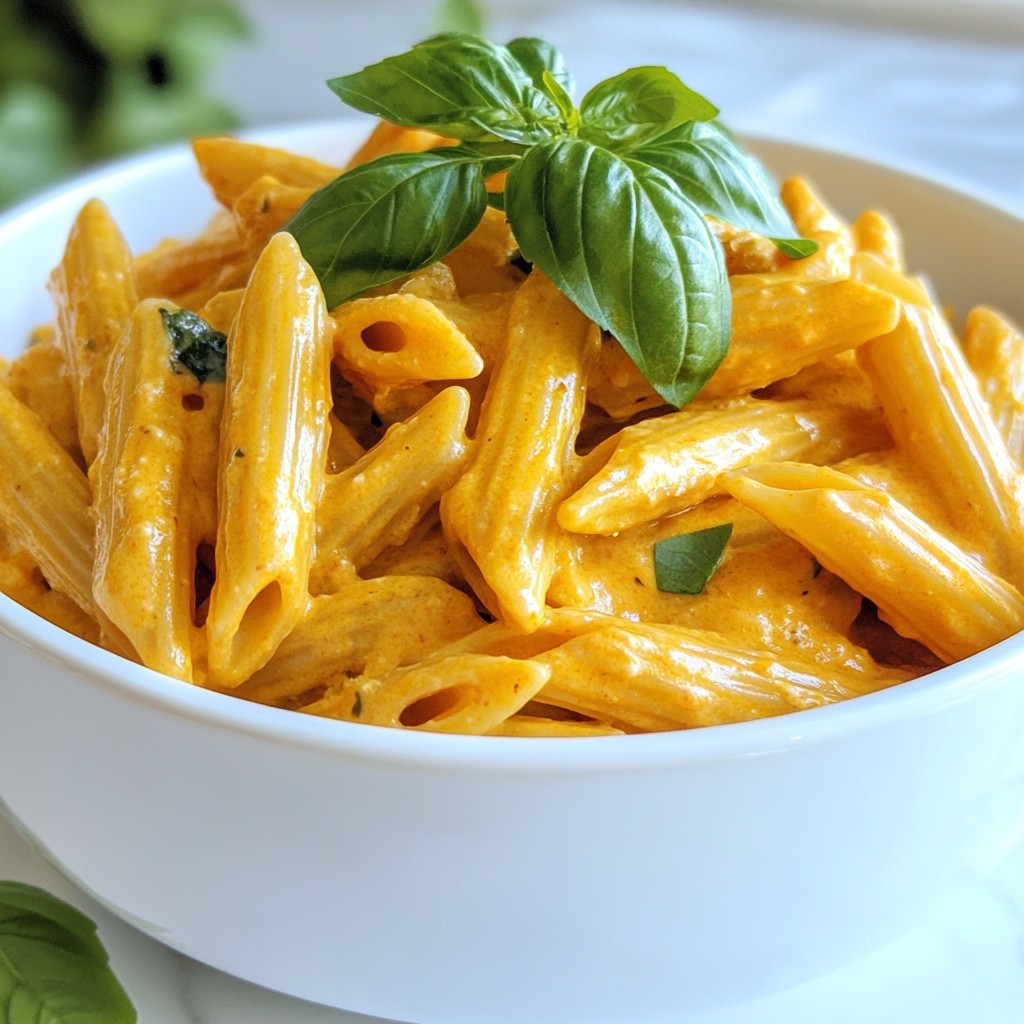
Are you ready to impress your family with a dish that's both simple and delicious? Creamy Roasted Red Pepper Pasta is a crowd-pleaser that combines rich flavors and easy steps. I’ll guide you through the ingredients, cooking tips, and some fun variations to make it your own. Whether you’re an expert chef or a beginner, this recipe will have everyone asking for seconds. Let’s get cooking!
Why I Love This Recipe
- Rich Flavors: This pasta dish combines the sweetness of roasted red peppers with creamy heavy cream, creating a comforting and rich flavor profile that’s hard to resist.
- Easy to Make: With simple ingredients and straightforward steps, this recipe is perfect for a weeknight dinner without sacrificing taste.
- Customizable: You can easily adapt this recipe by adding your favorite vegetables or protein, making it versatile for any dietary preferences.
- Impressive Presentation: The vibrant color and creamy texture make this dish visually appealing, perfect for impressing guests at dinner parties.
Ingredients
List of Essential Ingredients
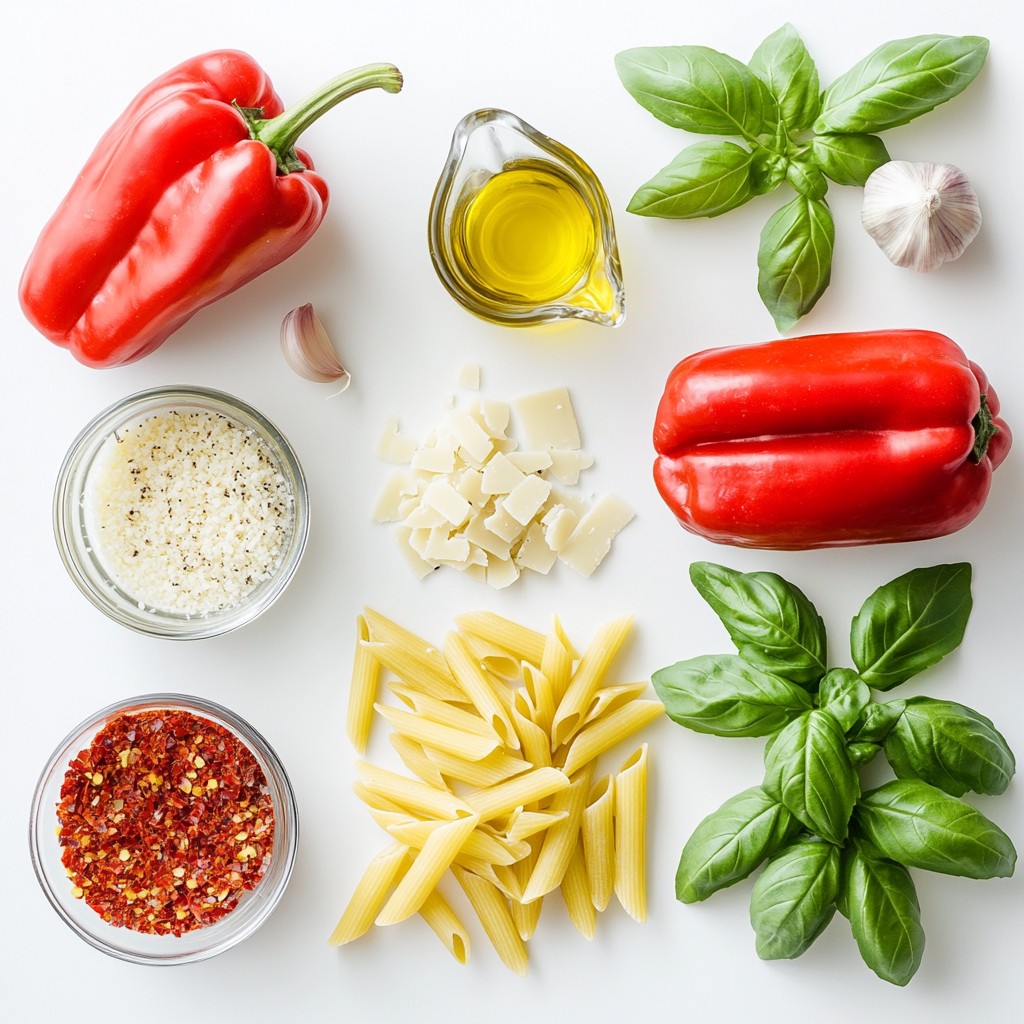
To make creamy roasted red pepper pasta, you need:
- 12 oz pasta (penne or fettuccine)
- 2 large red bell peppers
- 1 cup heavy cream
- 1 tablespoon olive oil
- 3 cloves garlic, minced
- ½ cup grated Parmesan cheese
- 1 teaspoon dried basil
- ½ teaspoon smoked paprika
- Salt and pepper to taste
- Fresh basil leaves for garnish
Notes on Ingredient Substitutions
If you don’t have heavy cream, you can use half-and-half for a lighter sauce. For a dairy-free option, try using coconut cream or cashew cream. You can swap the Parmesan cheese for nutritional yeast if you want a vegan dish. If you don’t have red bell peppers, yellow or orange ones work well too.
Ingredient Preparation Tips
Roasting the red peppers brings out their sweet flavor. Make sure to remove the seeds and cut them in half for even roasting. When cooking pasta, do not forget to reserve some pasta water. It helps adjust the sauce’s thickness later. Minced garlic adds a lot of flavor. Sauté it just until fragrant, so it doesn’t burn. This step is key to a delicious sauce.
Step-by-Step Instructions
Prepping the Red Peppers
Start by preheating your oven to 400°F (200°C). Take two large red bell peppers and cut them in half. Remove all the seeds. Place the peppers cut side down on a baking sheet. Roast them in the oven for about 20 to 25 minutes. You want the skin to get blistered and blackened. After roasting, take them out and let them cool for a few minutes. Once cool, peel off the charred skin and chop the peppers into small pieces.
Cooking the Pasta
While the peppers cool, cook your pasta. You can use penne or fettuccine. Follow the package instructions until your pasta is al dente. After it cooks, drain the pasta but keep ½ cup of the pasta water. Set the pasta aside for later.
Making the Creamy Sauce
In a large skillet, add one tablespoon of olive oil and heat it on medium. Once hot, add three cloves of minced garlic. Sauté the garlic for about one minute. You want it fragrant but not browned. Next, add the roasted red peppers to the skillet. Cook them for an additional two to three minutes while stirring.
Now, pour in one cup of heavy cream and bring it to a gentle simmer. Stir in ½ cup of grated Parmesan cheese, one teaspoon of dried basil, and ½ teaspoon of smoked paprika. Season with salt and pepper to taste. Let it cook for about five minutes, whisking it until everything is well combined and creamy.
For a smooth sauce, blend it using an immersion blender or transfer it to a regular blender. If the sauce is too thick, add a splash of the reserved pasta water until you reach your desired consistency. Finally, toss your cooked pasta in the creamy roasted red pepper sauce until it’s well coated. If needed, add more pasta water to loosen the sauce. Serve hot, garnished with fresh basil leaves and extra Parmesan cheese if you like.
Tips & Tricks
Perfecting the Sauce Texture
To get the best sauce texture, blend the roasted red peppers well. Use an immersion blender for easy mixing. If your sauce feels too thick, add a little pasta water. This helps it coat the pasta nicely. Aim for a creamy yet light feel.
Enhancing Flavor Profiles
Add depth to your sauce with smoked paprika and dried basil. Both add warmth and a nice aroma. For a kick, consider a pinch of red pepper flakes. Fresh herbs like basil also brighten the dish. Just sprinkle them on top before serving.
Common Mistakes to Avoid
One common mistake is overcooking the garlic. Sauté it just until fragrant. Burnt garlic can taste bitter and spoil the sauce. Also, don’t skip peeling the roasted peppers. The skin can be tough and ruin the creamy texture. Lastly, always reserve some pasta water! It’s key for adjusting sauce consistency.
Pro Tips
- Roasting Peppers: For a deeper flavor, let the red peppers roast until the skin is blackened and blistered; this enhances the sweetness of the peppers.
- Pasta Water Magic: Always reserve some pasta water before draining; it can be used to adjust the sauce's consistency and helps it cling better to the pasta.
- Fresh Herbs: Add fresh basil at the end of cooking to retain its vibrant flavor and aroma; dried herbs can lose potency when cooked too long.
- Blending Tips: For a super creamy sauce, blend the roasted pepper mixture thoroughly; if using a regular blender, be cautious with hot liquids to avoid splatter.
Variations
Adding Protein Options
You can make this dish heartier by adding protein. Grilled chicken or shrimp works great. Cook them in the skillet before adding the garlic. Toss the cooked protein with the pasta and sauce for a complete meal. You can also use cooked sausage or bacon for added flavor.
Vegetarian Alternatives
If you want a vegetarian twist, use chickpeas or lentils for protein. They add a nice texture to the dish. You can also add sautéed mushrooms for a rich flavor. Spinach or kale can be stirred in for extra nutrients and color.
Spice and Herb Variations
To change the flavor, try different spices. Add red pepper flakes for heat. Italian seasoning can boost the taste too. Fresh herbs like thyme or oregano can add brightness. Experimenting with smoked paprika or a dash of lemon juice can also enhance the sauce.
Storage Info
How to Store Leftovers
After you enjoy your creamy roasted red pepper pasta, you may have some left. Cool the pasta to room temperature. Then, place it in an airtight container. Store it in the fridge. It stays fresh for up to three days. If you want to keep it longer, consider freezing it.
Reheating Instructions
To reheat the pasta, take it out of the fridge. You can use a microwave or a stove. If using a microwave, heat it for one minute at a time until warm. Stir it well between each minute. For the stove, add a splash of water or cream to prevent sticking. Heat over low until warm.
Freezing and Thawing Tips
If you freeze the pasta, it’s best to do so in portions. Use airtight containers or freezer bags. Label them with the date. To thaw, place the container in the fridge overnight. You can also use the microwave on a low setting. Once thawed, reheat as mentioned before.
FAQs
Can I use different types of pasta?
Yes, you can use any pasta you like. Penne or fettuccine works well. Other types like spaghetti or rigatoni are great too. Just follow the cooking time on the package. Make sure the pasta is al dente for the best texture.
What can I substitute for heavy cream?
You can use half-and-half or whole milk if you want a lighter option. For a dairy-free choice, try coconut cream or cashew cream. Both add a rich flavor to the sauce. Make sure to adjust the seasoning to balance the creaminess.
How do I make this recipe vegan?
To make this dish vegan, substitute heavy cream with coconut cream or any plant-based cream. Use nutritional yeast instead of Parmesan cheese for a cheesy flavor. You can also add a bit of lemon juice for extra zest. This keeps the dish creamy and delicious!
This blog post covered essential ingredients and their substitutions for your dish. You learned how to prep red peppers, cook pasta, and make a creamy sauce. We shared tips for the perfect sauce texture and common mistakes to avoid. You can also explore variations like adding proteins or making it vegan. Lastly, we outlined storage tips for leftovers.
Enjoy trying these ideas in your kitchen. Experiment with flavors and have fun!