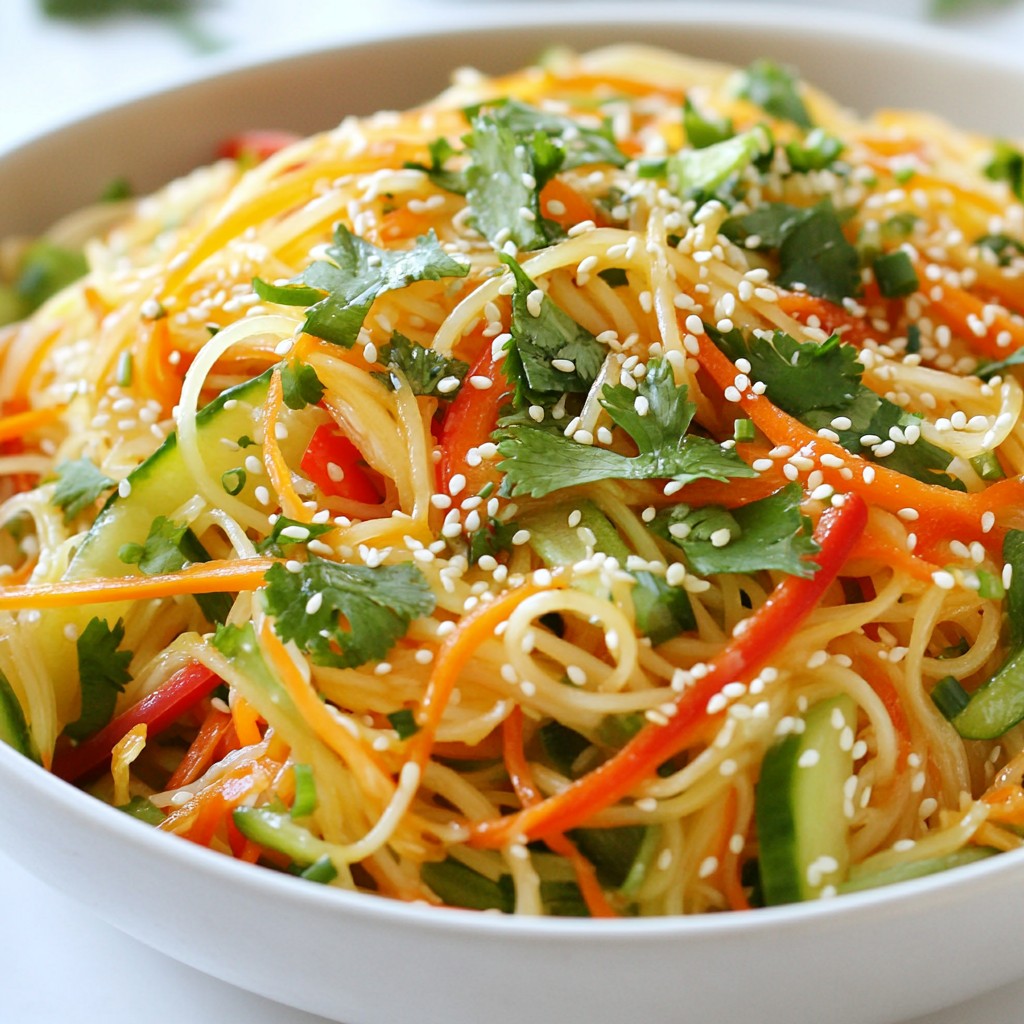
Are you ready to create a dish that bursts with flavor? My Savory Sesame Ginger Noodle Salad combines tender rice noodles, crisp vegetables, and a zesty dressing to make every bite refreshing. With simple ingredients and step-by-step instructions, you can whip up this delight in no time. Let's dive into the world of savory goodness and make your next meal unforgettable!
Why I Love This Recipe
- Fresh Flavors: This salad is bursting with vibrant, fresh ingredients that create a delightful crunch in every bite.
- Quick and Easy: With a prep time of just 15 minutes, this dish is perfect for busy weeknights or last-minute gatherings.
- Customizable: You can easily swap in your favorite vegetables or proteins, making it versatile for any taste preference.
- Healthy and Nourishing: Loaded with vegetables and tossed in a flavorful dressing, this salad is not only delicious but also packed with nutrients.
Ingredients
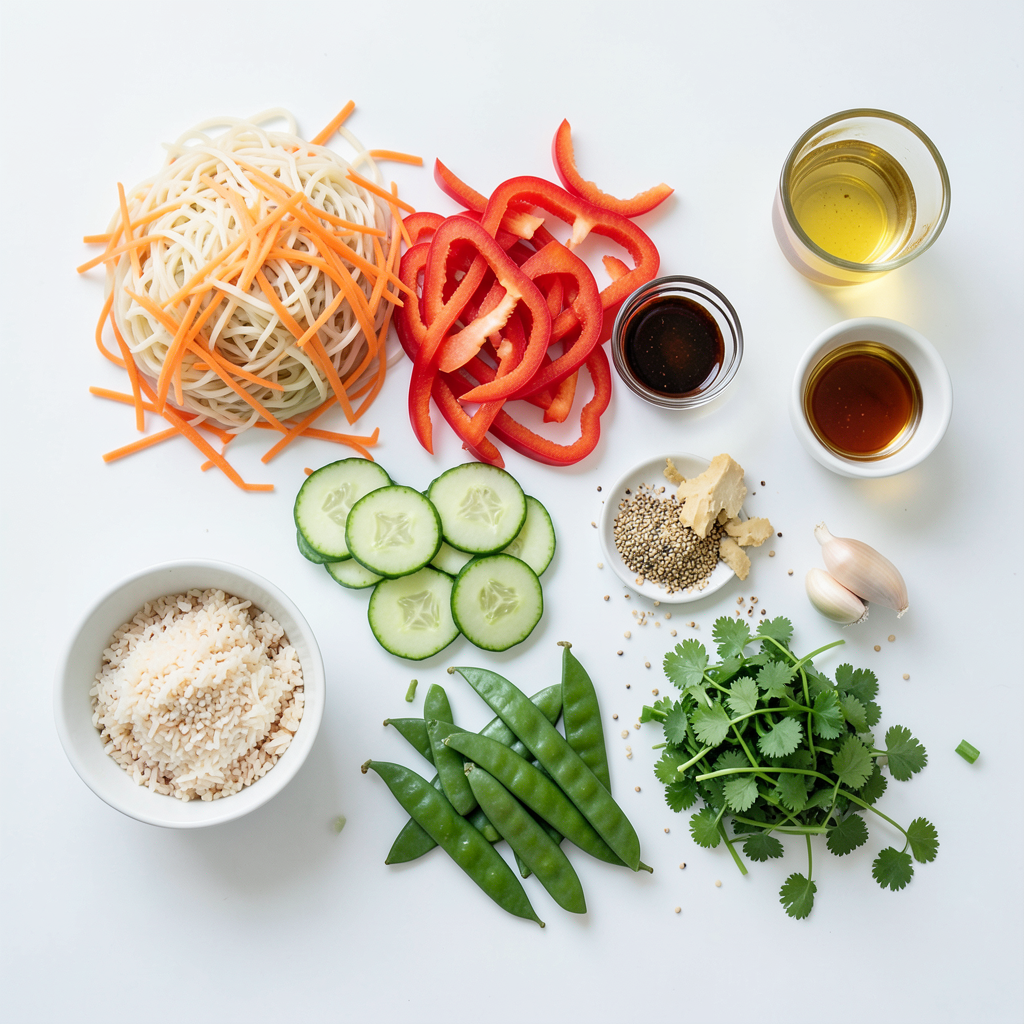
Main Ingredients
- 8 oz rice noodles
- 1 cup shredded carrots
- 1 red bell pepper, thinly sliced
- 1 cucumber, julienned
- 1 cup sugar snap peas, trimmed
- 3 green onions, chopped
- 1/4 cup fresh cilantro, chopped
- 1/4 cup sesame seeds, toasted
Rice noodles are the star of this dish. They offer a soft, chewy base. The fresh vegetables bring crunch and color. Shredded carrots add sweetness. The red bell pepper gives a pop of flavor. Cucumber cools the dish down. Sugar snap peas add a snap to every bite. Green onions give a nice, mild bite. Cilantro adds freshness, while toasted sesame seeds give a nutty finish.
Dressing Ingredients
- 1/4 cup soy sauce (or tamari for gluten-free)
- 2 tablespoons ginger, freshly grated
- 2 tablespoons sesame oil
- 1 tablespoon honey (or agave syrup for vegan option)
- 1 tablespoon rice vinegar
- 1 teaspoon garlic, minced
- 1 teaspoon sriracha (optional for heat)
The dressing brings everything together. Soy sauce adds depth. Fresh ginger and garlic give a zesty kick. Sesame oil adds richness. Honey or agave adds sweetness. Rice vinegar brightens each bite. Sriracha is great if you enjoy heat.
Optional Add-ins
- Sweeteners and sriracha for heat
- Other garnishes
You can customize this salad. If you want more heat, add more sriracha. If you like it sweeter, add more honey or agave. Other garnishes can include chopped nuts or more herbs. You can even toss in some protein like grilled chicken or tofu. This salad is flexible, making it a perfect dish for any meal.
Step-by-Step Instructions
Cooking the Noodles
To cook rice noodles, start by boiling a large pot of water. Add the noodles and cook them according to the package instructions. This usually takes about 4 to 6 minutes. After they're soft, drain them in a colander. Rinsing the noodles under cold water is key. This stops the cooking process and keeps them from getting sticky.
Preparing the Vegetables
When slicing and chopping vegetables, use a sharp knife for clean cuts. Thinly slice the red bell pepper and julienne the cucumber. Shred the carrots with a grater for a nice texture. In a large bowl, mix together the shredded carrots, sliced red bell pepper, julienned cucumber, sugar snap peas, and chopped green onions.
Making the Dressing
In a small bowl, whisk together the dressing ingredients. Combine soy sauce, freshly grated ginger, sesame oil, honey, rice vinegar, minced garlic, and sriracha if you want some heat. To emulsify, whisk quickly until the mixture is smooth and well blended. You can add more honey for sweetness or sriracha for spice based on your taste.
Combining the Salad
Add the cooled noodles to the vegetable mix. Pour the dressing over everything. Use your hands or two large spoons to gently toss the salad. Make sure all the noodles and veggies get coated with the dressing. This step is important for flavor distribution.
Final Touches
Sprinkle toasted sesame seeds and chopped cilantro over the salad. Give it one last gentle toss. Let the salad sit for about 10 minutes. This resting time helps the flavors mix well before serving.
Tips & Tricks
Perfecting Texture
To keep the rice noodles firm, cook them just until tender. Drain them right away and rinse with cold water. This stops the cooking process. It prevents mushiness. For the veggies, slice them thin. This helps them stay crisp. Keep the sugar snap peas whole for a nice crunch. Freshness matters in every bite.
Flavor Boosting Techniques
Adjust the dressing to fit your taste. You can add more ginger for zing. If you like it sweeter, mix in more honey. Don’t forget to taste as you go. For even better flavor, let the salad marinate. Ten minutes is perfect. This allows the flavors to blend well together.
Serving Suggestions
Serve the salad chilled or at room temperature. It tastes great either way. Pair it with grilled chicken or tofu for protein. This makes it a complete meal. You could also serve it with spring rolls for a fun side. Enjoy the mix of flavors and textures!
Pro Tips
- Perfect Noodle Texture: To achieve the ideal texture, make sure to rinse the rice noodles under cold water thoroughly after cooking to stop them from becoming mushy.
- Fresh Ingredients Matter: Use fresh, high-quality vegetables for the best flavor and crunch. Look for vibrant colors and firm textures.
- Customize the Heat: Adjust the amount of sriracha in the dressing to suit your spice preference. You can also add sliced jalapeños for extra heat.
- Let it Rest: Allow the salad to sit for 10 minutes before serving. This will help the flavors meld together beautifully.
Variations
Vegetarian and Vegan Options
To make this salad vegan, you can swap honey for agave syrup. This option keeps the sweetness while staying plant-based. For protein, try adding tofu or chickpeas. Both options enhance the meal and keep it filling.
Nut-Free Alternatives
If you want to avoid nuts, simply leave out sesame seeds. You can also try different dressings. A peanut-free dressing can use sunflower oil or olive oil instead of sesame oil. This change keeps the flavor fresh and light.
Seasonal Ingredient Swaps
Using seasonal veggies can liven up your salad. In spring, add asparagus or radishes for a crisp bite. In fall, consider roasted sweet potatoes or kale. Dressing can also change with the seasons. In summer, a light citrus dressing works great. In winter, try a richer sesame ginger blend. This keeps your dish exciting year-round.
Storage Info
Best Practices for Storing
To keep leftover salad fresh, store it in an airtight container. This helps lock in flavors and moisture. Place the container in the refrigerator. The salad will stay fresh for about 2 to 3 days. After that, the veggies may lose their crunch.
Meal Prepping Tips
You can prepare the ingredients ahead of time. Chop the veggies and store them in the fridge. Cook the rice noodles and let them cool. Keep each component separate. Assemble the salad just before serving to keep it crisp.
Freezing Considerations
You can freeze noodle salad, but it's not ideal. Freezing can make the noodles soggy. If you decide to freeze, store the salad without the dressing. When ready to eat, thaw it in the fridge overnight. Add fresh dressing once thawed for the best taste.
FAQs
Common User Questions
How to make Sesame Ginger Noodle Salad gluten-free? To make this salad gluten-free, use tamari instead of soy sauce. Tamari is made without wheat. Also, check your rice noodles to ensure they have no gluten. Most rice noodles are naturally gluten-free.
Can I use other types of noodles? Yes, you can swap rice noodles for other kinds. Soba noodles or whole wheat noodles work well. Just cook them according to their package instructions. Adjust the cooking time for different noodles.
What can I serve with this salad? This salad pairs well with grilled chicken or shrimp. You can also serve it as a side with Asian-style dishes. It’s a great addition to any picnic or potluck meal.
Dressing Customization
How to adjust spice levels? To adjust spice levels, add more or less sriracha. If you prefer no heat, skip the sriracha altogether. You can also add a pinch of red pepper flakes for a milder spice.
Can I use pre-made dressings? Yes, using pre-made dressings is fine. Choose an Asian-style dressing for the best flavor. Just make sure it suits your taste and dietary needs.
Nutritional Information
Caloric content breakdown One serving of Sesame Ginger Noodle Salad has about 250 calories. The exact number can change based on your ingredients. Check your dressing and noodle labels for precision.
Nutritional benefits of ingredients This salad is packed with nutrients. Carrots provide beta-carotene, which is good for your eyes. Cucumbers offer hydration, while bell peppers add vitamin C. The sesame seeds are full of healthy fats too.
This blog post detailed how to make a fresh noodle salad. You learned about key ingredients, like rice noodles and fresh veggies, and the simple steps to prepare them. I shared tips to boost flavor and texture, along with variations to meet different dietary needs. Finally, I covered storage methods to keep your salad fresh. With these insights, you can create a tasty and healthy dish that suits your taste and lifestyle. Enjoy your cooking adventure and experiment with your favorite ingredients!