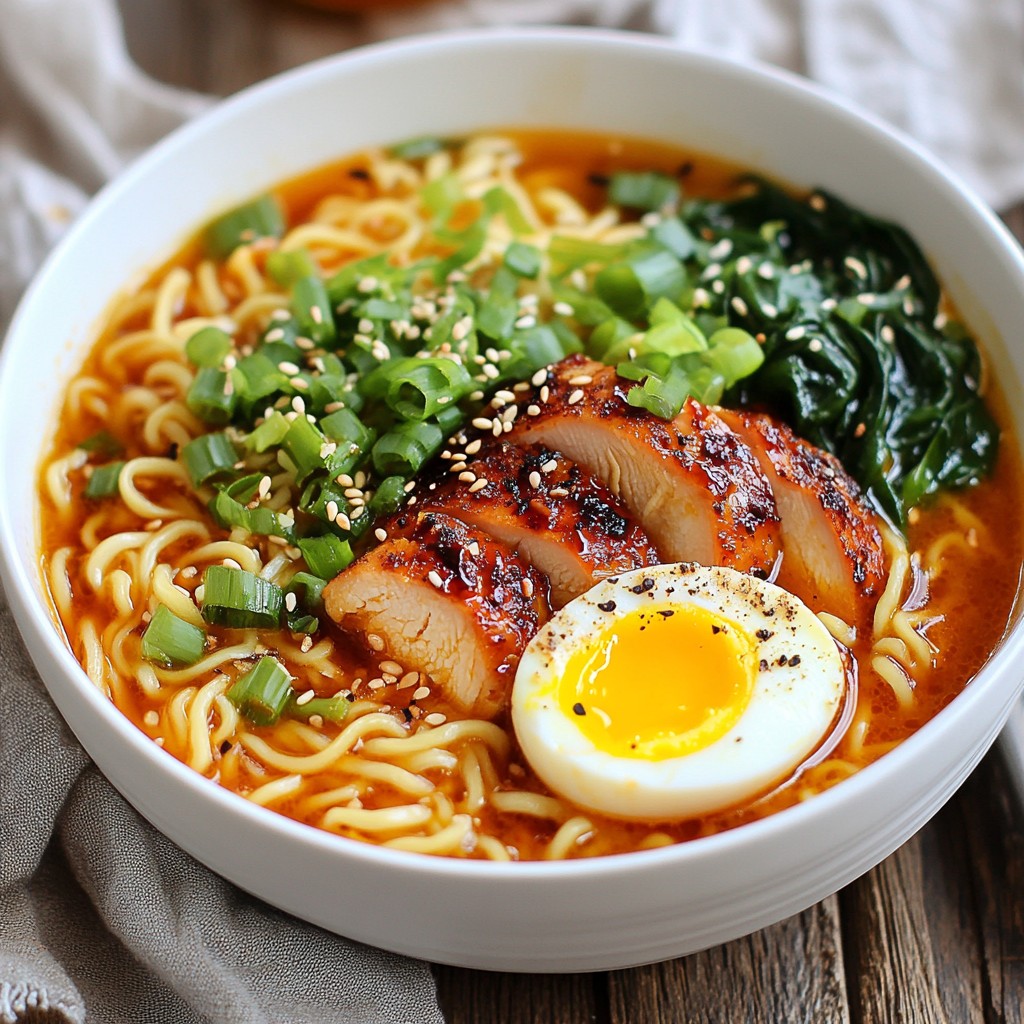
Craving a bowl of spicy comfort? Dive into my Spicy Miso Ramen with Chicken for a savory flavor boost that warms both heart and soul. This recipe combines tender chicken thighs and rich miso paste to create a delicious broth. Whether you’re a ramen novice or a seasoned chef, follow my simple steps for a taste that’ll leave everyone asking for seconds. Get ready to spice up your dinner tonight!
Why I Love This Recipe
- Bold Flavors: This recipe combines the rich umami of miso with the warmth of chili, creating a bowl of ramen that's bursting with flavor.
- Quick and Easy:
- Customizable Heat: Adjust the level of spiciness to your liking by varying the amount of chili paste, making it suitable for everyone.
- Healthy Ingredients: Packed with protein from chicken and nutrients from spinach, this ramen is a deliciously healthy choice.
Ingredients
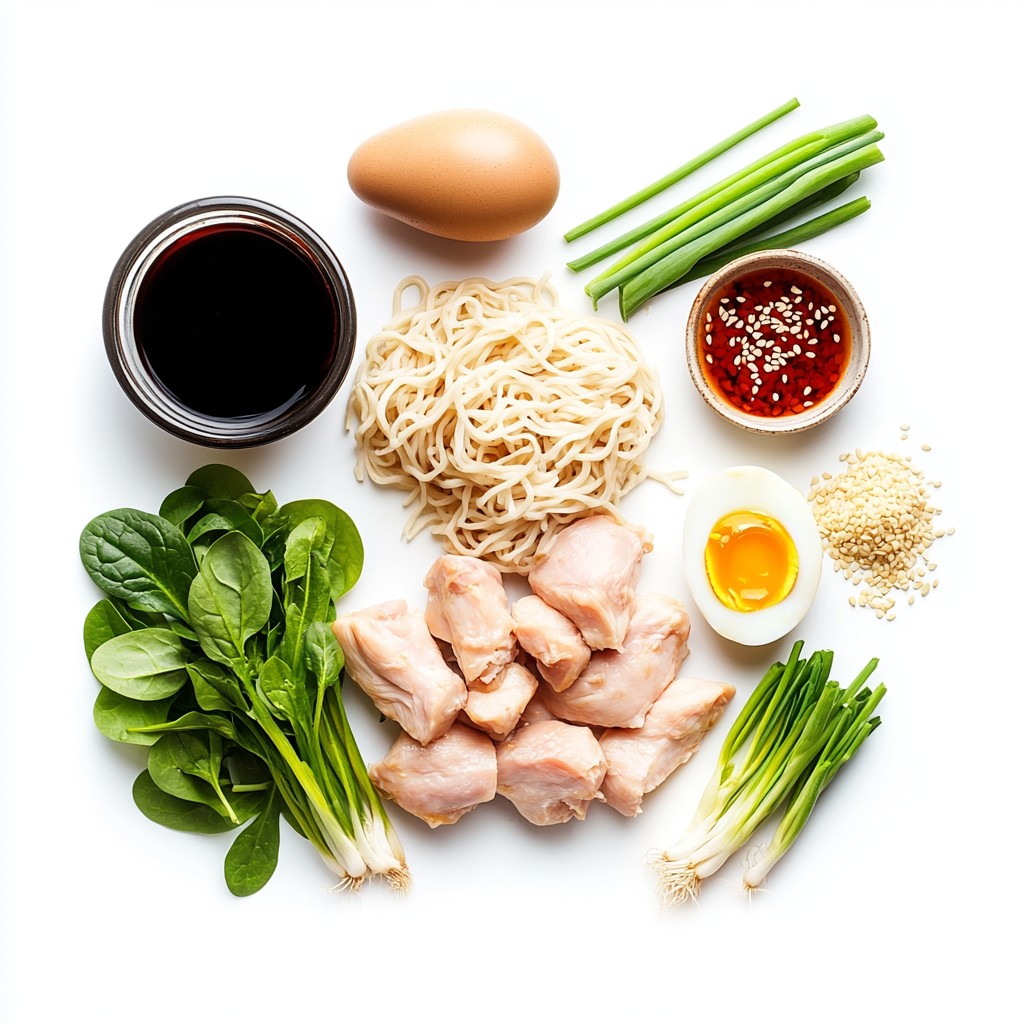
List of Ingredients
- 2 chicken thighs, boneless and skinless, diced
- 2 tablespoons miso paste (red or white)
- 4 cups chicken broth
- 2 tablespoons soy sauce
- 1 tablespoon sesame oil
- 1 tablespoon chili paste (adjust to taste)
- 4 ounces ramen noodles
- 2 green onions, chopped
- 1 cup baby spinach
- 1 garlic clove, minced
- 1 teaspoon ginger, grated
- Soft-boiled eggs for topping (optional)
- Sesame seeds for garnish
Notes on Ingredient Quality
Using fresh ingredients makes a big difference. Fresh vegetables, like green onions and baby spinach, bring bright flavors and textures. Always choose chicken thighs over breasts for this dish. Thighs stay juicy and tender when cooked. They add rich flavor, perfect for the savory broth.
Substitutes and Alternatives
If you want vegan miso ramen, try using tofu instead of chicken. For the broth, use vegetable broth and a vegan miso paste. You can find gluten-free ramen noodles in many stores. These noodles work well for those who need to avoid gluten but still want that slurp-worthy experience.
Step-by-Step Instructions
Preparing the Broth
1. Start by heating sesame oil in a large pot over medium heat.
2. Add minced garlic and grated ginger. Sauté for about one minute. The smell will be amazing!
3. Next, add diced chicken thighs to the pot. Cook them until they turn brown, which takes about five to seven minutes.
4. Once the chicken is browned, pour in four cups of chicken broth. Bring it to a simmer.
Mixing the Miso Paste
1. In a small bowl, mix together two tablespoons of miso paste with two tablespoons of soy sauce. Stir until smooth.
2. Gradually whisk this mixture into the pot with the broth. Make sure it dissolves completely.
3. For a spicy kick, stir in one tablespoon of chili paste. Adjust the amount based on how spicy you want it. Allow the broth to simmer for an extra ten minutes.
Cooking the Ramen Noodles
1. While the broth simmers, cook four ounces of ramen noodles according to the package instructions.
2. Watch the timing closely for perfect noodle consistency. You want them firm but cooked.
3. Once done, drain the noodles and set them aside until you're ready to serve.
Tips & Tricks
Achieving the Perfect Flavor
Simmering time is key for deep flavor. When you let the broth simmer, it allows the spices and ingredients to blend well. Aim for at least 10 minutes after adding the miso and chili paste. This step makes a big difference.
To enhance depth of flavor, consider adding more ginger or garlic. Fresh ingredients create a strong taste. You can also try adding a splash of soy sauce for extra umami. Trust me, these small tweaks can elevate your ramen.
Presentation Tips
Plating your ramen can impress anyone. Use a large bowl. Place the noodles in the center, then pour the broth around them. Add toppings like soft-boiled eggs, spinach, and green onions on top. It creates a colorful dish.
For garnishes, sprinkle sesame seeds for crunch. A drizzle of chili oil adds shine and heat. This not only looks great but also enhances the flavor.
Cooking Techniques
To avoid overcooked or mushy noodles, cook them just until tender. Follow package instructions closely. Drain them quickly and rinse under cold water to stop cooking. This keeps them firm and chewy.
For chicken, you can grill or bake it as an alternative. Grilling adds a smoky flavor, while baking keeps it juicy. Both methods work well in this recipe.
Pro Tips
- Choose the Right Miso: Red miso has a bolder flavor, while white miso is milder. Select based on your taste preference for the broth.
- Adjust Spice Level: Start with a smaller amount of chili paste and taste as you go to achieve your desired level of spiciness.
- Perfect Soft-Boiled Eggs: For a creamy center, boil eggs for exactly 6-7 minutes, then plunge them into ice water to stop the cooking.
- Garnish Creatively: Enhance presentation with fresh herbs like cilantro or additional toppings like nori (seaweed) or sliced chili.
Variations
Different Protein Options
You can switch up the protein in your spicy miso ramen. If you want to go meat-free, try using tofu. Tofu absorbs flavors well and adds a nice texture. You can also use shrimp. It cooks fast and pairs well with the spicy broth.
For those who enjoy more meat, consider adding pork or beef. Thin slices of cooked pork belly or tender beef can add richness. Just make sure to adjust the cooking time for each protein.
Flavor Customizations
Spicy miso ramen offers room for flavor tweaks. If you want more heat, use different chili pastes. Gochujang adds a sweet and spicy kick. Sriracha brings a tangy flavor, while sambal oelek has a bold taste.
Feel free to add more vegetables too. Carrots, mushrooms, or bok choy can add color and nutrition. You can also toss in corn or bean sprouts for a crunchy bite.
Serving Suggestions
When serving spicy miso ramen, pair it with tasty sides. Edamame or seaweed salad complements the dish well. You can also serve it with a light appetizer like gyoza.
For drinks, a chilled sake or a light beer works great. If you prefer non-alcoholic options, try green tea or a citrus soda. These choices balance the rich flavors of the ramen.
Storage Info
How to Store Leftovers
To keep your spicy miso ramen fresh, store the broth and noodles separately. This way, the noodles won’t soak up too much liquid and become mushy. Use airtight containers to hold the broth and the noodles. Label them with the date to track freshness.
Reheating Instructions
When you reheat ramen, do it gently. Warm the broth in a pot on low heat. If you microwave, use a bowl with a lid to avoid splatters. For noodles, add them to the broth while it heats. Look for signs of spoilage like a sour smell or off-color in the broth. If you notice these, it’s best to throw it out.
Freezing Tips
You can freeze ramen soup, but it’s best to freeze just the broth. Cooked noodles don’t freeze well. To freeze, let the broth cool first. Pour it into freezer-safe bags or containers, leaving some space for expansion. When ready to eat, thaw in the fridge overnight and reheat.
FAQs
What is the best type of miso for ramen?
Red and white miso both work well in ramen. Red miso has a stronger flavor. It brings a rich depth to your broth. White miso is milder and sweeter. It gives a lighter taste to the dish. I recommend using red miso for a bold flavor. However, white miso can be a great choice if you prefer something gentler. Try both to find your favorite.
How spicy can I make the ramen?
You can adjust the spice level easily. Start with one tablespoon of chili paste for mild heat. If you want it spicier, add more chili paste. Taste as you go to find your perfect balance. Remember, the heat can build over time, so don’t rush it. Serve your spicy miso ramen with extra chili paste on the side. This way, everyone can customize their bowl.
Can I make this ramen vegetarian?
Yes, you can make this ramen vegetarian. Swap chicken broth for vegetable broth. This keeps the rich flavor while making it meat-free. For protein, use tofu or tempeh instead of chicken. You can also add extra veggies like mushrooms or bok choy for more texture. This way, you still enjoy a savory and hearty bowl of ramen without meat.
In summary, this blog post detailed how to create delicious ramen using chicken thighs and miso paste. We discussed the importance of ingredient quality and offered alternatives for dietary needs. You now have step-by-step instructions for making the broth, cooking noodles, and adding flavor. Remember to store leftovers properly and follow reheating tips to enjoy later. With practice, you'll craft tasty bowls of ramen that can impress anyone. Enjoy experimenting and customizing your ramen creations!