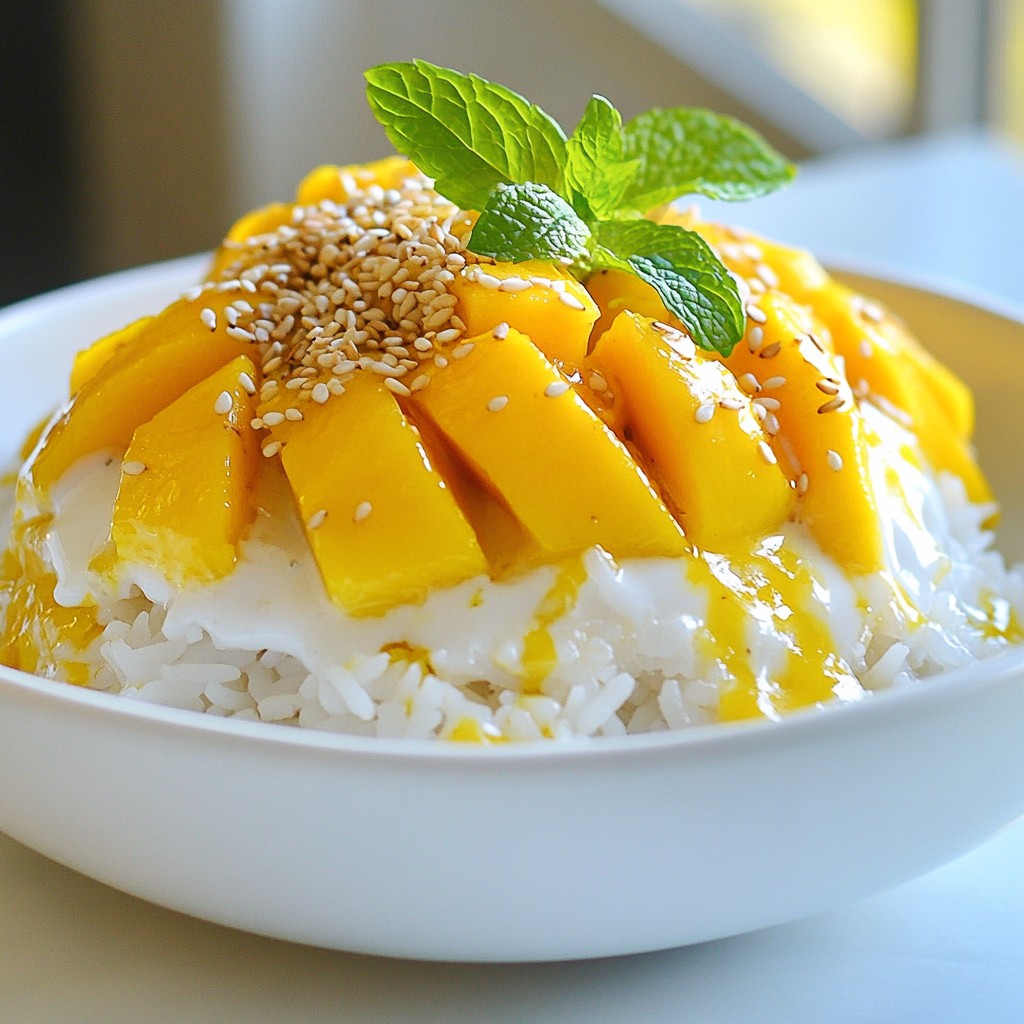
Are you ready to indulge in a sweet, tropical treat? Thai Coconut Mango Sticky Rice is the perfect dessert that combines creamy coconut and ripe mango in every bite. In this guide, I’ll share everything you need, from selecting the best mangoes to perfecting the sticky rice texture. With my step-by-step recipe and handy tips, you’ll impress everyone with this delightful dessert. Let’s get started on your new favorite dish!
Why I Love This Recipe
- Exotic Flavors: This dish combines the sweetness of ripe mango with the rich creaminess of coconut milk, creating a tropical delight that transports you straight to a beach paradise.
- Simple Ingredients: With just a few pantry staples, you can create this stunning dessert that looks as good as it tastes, making it perfect for any occasion.
- Customizable: You can easily adjust the sweetness or add toppings like toasted nuts or fruits, allowing for a personalized touch that suits your taste.
- Perfect for Sharing: This recipe yields enough to serve four, making it a great option for gatherings or family dinners, bringing everyone together over a delicious dessert.
Ingredients
Essential Ingredients for Thai Coconut Mango Sticky Rice
To make this tasty dessert, you need a few key items. Here’s what you should gather:
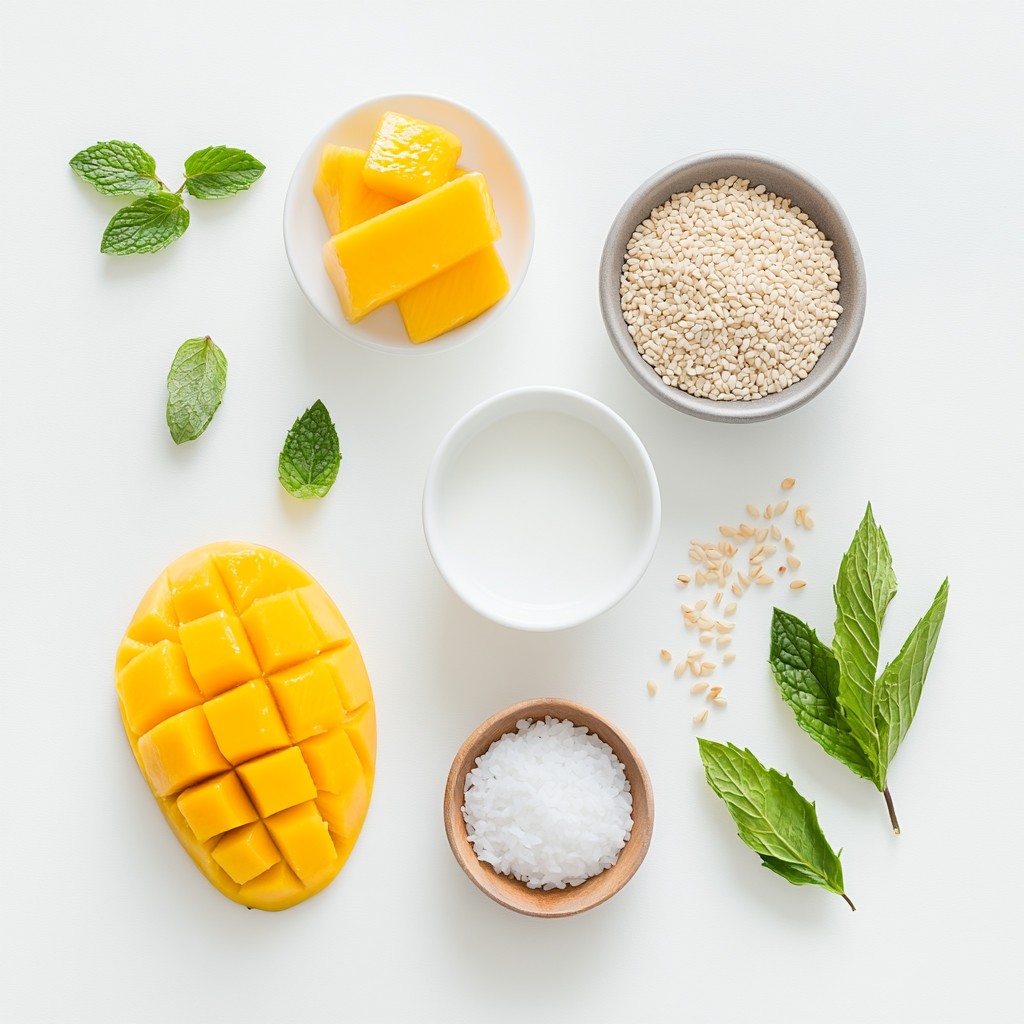
- 1 cup glutinous rice (sticky rice)
- 1 ½ cups coconut milk
- ½ cup sugar
- ¼ teaspoon salt
- 1 ripe mango, peeled and sliced
- 1 tablespoon sesame seeds (toasted)
- Fresh mint leaves for garnish (optional)
Having quality ingredients is key. The glutinous rice gives that classic sticky texture. Coconut milk adds creaminess and sweetness. The sugar and salt balance the flavors. A ripe mango brings freshness and color to the dish.
Tips for Choosing the Best Ripe Mangoes
When picking mangoes, look for ones with smooth skin and a sweet smell. Good mangoes should feel slightly soft when you press them. Here are some tips:
- Choose mangoes that are mostly yellow or orange.
- Avoid mangoes with dark spots or wrinkles.
- If they are too firm, let them sit at room temperature for a few days.
Ripe mangoes will enhance your sticky rice dish. Their juiciness complements the creamy coconut sauce perfectly.
Optional Garnishes and Flavor Enhancements
You can make your dessert even better with a few simple extras. Consider adding:
- Toasted sesame seeds for a nutty crunch.
- Fresh mint leaves for a pop of color and flavor.
- Shredded coconut for added texture.
These garnishes are not just pretty; they also add flavor. Each bite becomes a mix of sweet, creamy, and crunchy. Enjoy experimenting with these options!
Step-by-Step Instructions
How to Rinse and Soak Glutinous Rice
Start by taking 1 cup of glutinous rice. Place it in a bowl. Rinse the rice under cold water. Keep rinsing until the water runs clear. This step removes extra starch. It helps the rice become sticky. After rinsing, soak the rice in clean water. Let it soak for at least 4 hours. For the best results, soak it overnight. This softens the rice and helps it cook evenly.
The Perfect Steaming Method for Sticky Rice
After soaking, drain the rice well. Use a bamboo steamer lined with cheesecloth. If you do not have a steamer, use a heatproof dish. Fill a pot with water and bring it to a boil. Carefully place the steamer over the pot. Steam the rice for about 30 to 35 minutes. The rice should become tender and sticky. Avoid opening the steamer too often. This keeps the heat inside.
Preparing the Coconut Milk Sauce
While the rice steams, prepare the coconut milk sauce. In a saucepan, mix together 1 ½ cups of coconut milk, ½ cup of sugar, and ¼ teaspoon of salt. Stir over medium heat. Keep stirring until the sugar dissolves. Be careful not to let it boil. Once done, set aside about ⅓ cup of this mixture. You will drizzle it later. When the rice is ready, transfer it to a large bowl. Pour the remaining coconut sauce over the rice. Mix gently with a spatula. Let it sit for about 10 minutes. This allows the rice to absorb the flavors.
Tips & Tricks
Perfecting the Sticky Texture of Rice
To get that perfect sticky rice, rinse the glutinous rice well. Wash it until the water runs clear. This step removes excess starch. Soaking is key too. Soak the rice for at least four hours. Overnight soaking works best for tenderness. When you steam the rice, use a bamboo steamer or a heatproof dish. Steam it for 30 to 35 minutes. The rice should be soft and sticky when done.
Common Mistakes to Avoid
One common mistake is not soaking the rice long enough. Rushing this step leads to dry rice. Make sure to measure your water when steaming. Too little water can lead to burnt rice. Another mistake is boiling the coconut milk. Heat it gently to avoid curdling. Lastly, don’t skip the resting time after mixing rice and coconut milk. Let it sit for at least 10 minutes. This helps the flavors blend well.
How to Achieve the Best Flavor Balance
For the best flavor, balance the sweetness of the coconut milk with salt. The salt enhances the taste without overpowering it. Use fresh, ripe mango for a fruity kick. Its sweetness pairs nicely with the creamy rice. Drizzle the reserved coconut milk sauce on top just before serving. Adding toasted sesame seeds gives a nice crunch. Garnish with mint for a fresh touch. Enjoy the mix of flavors and textures!
Pro Tips
- Rinse the Rice: Always rinse glutinous rice thoroughly until the water runs clear to achieve the perfect sticky texture.
- Soaking Time: Soaking the rice for at least 4 hours or overnight enhances its texture and ensures even cooking.
- Don’t Boil the Coconut Milk: Heat the coconut milk mixture gently; boiling can change the flavor and texture.
- Let it Absorb: After mixing the rice with the coconut milk, allow it to sit for 10 minutes so it can fully absorb the flavors.
Variations
Alternative Ingredients for a Unique Twist
Want to switch things up? You can use jasmine rice instead of glutinous rice. It gives a lovely floral aroma. If you prefer a creamier sauce, add more coconut milk. You can also use brown sugar for a deeper flavor. For a fruity twist, try adding a splash of pineapple juice to the coconut sauce. It adds a fun tropical flair.
Serving Suggestions for Different Occasions
This dessert is perfect for many events. Serve it at family gatherings or summer picnics. It’s great for celebrations like birthdays or anniversaries. You can make it a fancy treat for a dinner party. For a casual vibe, serve it in small bowls with fresh fruit on the side. This makes it easy for guests to enjoy.
Customizing Toppings and Add-Ins
Toppings can make your sticky rice even better. Try adding fresh berries for a pop of color. You can also sprinkle shredded coconut on top for extra texture. Crushed nuts like peanuts or almonds add a nice crunch. If you love spice, a dash of cinnamon can give warmth. For a fun twist, drizzle some chocolate sauce over it. It pairs surprisingly well with the coconut flavor.
Storage Info
Best Practices for Storing Leftovers
To keep your Thai Coconut Mango Sticky Rice fresh, store it in an airtight container. Make sure to let it cool to room temperature before sealing. This helps prevent moisture buildup, which can turn your dessert soggy. If you have extra coconut sauce, store it separately to drizzle later. You can also wrap the dish tightly with plastic wrap if you don’t have a container.
How Long Does Thai Coconut Mango Sticky Rice Last?
When stored properly, your sticky rice can last for about 3 to 4 days in the fridge. If you want to keep it longer, consider freezing it. Frozen sticky rice can last up to 3 months. Just make sure to label the container with the date. This way, you can enjoy your delicious dessert later.
Reheating Tips for Ideal Texture
To reheat your sticky rice, use a microwave or a steamer. If using the microwave, place a damp paper towel over the rice to keep it moist. Heat it in short bursts, checking every 30 seconds until warm. If you use a steamer, add a bit of water to keep the rice from drying out. This method helps restore that soft, sticky texture. Drizzle some coconut sauce over it for extra flavor when serving!
FAQs
Can I use regular rice instead of glutinous rice?
No, you cannot use regular rice. Glutinous rice has a special sticky quality. This rice is key for the right texture. Regular rice will not give you that same chewiness. It is best to stick with glutinous rice for this dish.
How can I make this dish vegan-friendly?
This dessert is mostly vegan already. Use coconut milk and sugar, which are vegan. Just make sure the sugar is vegan-friendly. Some sugars use bone char in processing, so check this. The rest of the ingredients, like mango and sesame seeds, are fine.
What other fruits pair well with coconut sticky rice?
Mango is a classic choice, but many fruits work well. Try ripe bananas or sweet pineapple for a fun twist. You can also use berries like strawberries or blueberries. These fruits add color and flavor to the dish. Mixing fruits can make each bite exciting!
We covered how to make Thai coconut mango sticky rice, from choosing ripe mangoes to tips for perfect texture. Remember, the right ingredients and careful preparation make a big difference. Don’t shy away from trying new variations or garnishes. This dish offers many options for personal flair. With the right care in storage and reheating, your sticky rice will stay delightful. Dive into this treat, and enjoy every bite!