
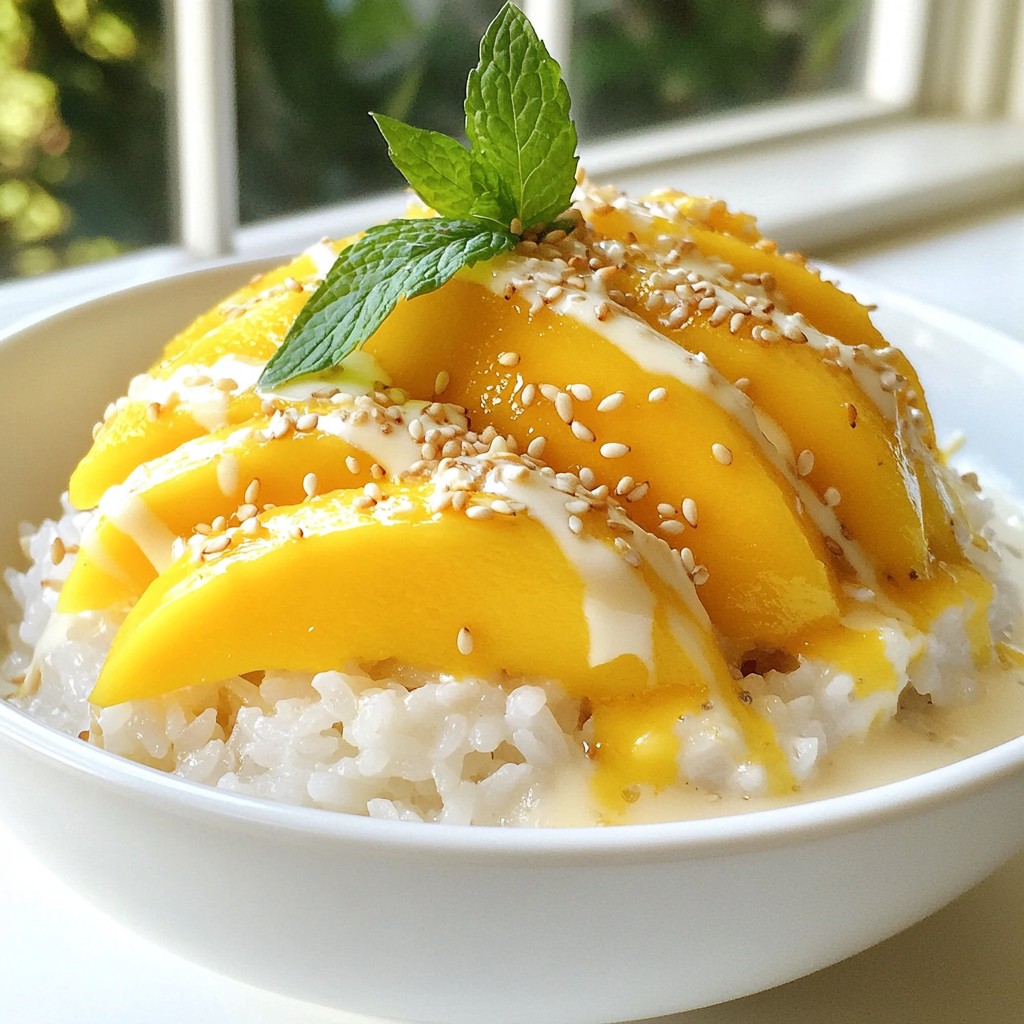
Are you ready to dive into the delicious world of Thai Mango Sticky Rice? This simple and tasty dessert brings a burst of tropical flavor to your plate. With just a few ingredients, like sticky rice, ripe mangoes, and sweet coconut milk, you can create a dish that impresses everyone. Follow my easy steps for a delightful experience, and find tips to make it perfect every time. Let’s get cooking!
Why I Love This Recipe
- Exotic Flavors: This dish combines the sweetness of mango with the creamy richness of coconut, creating a delightful tropical experience in every bite.
- Texture Contrast: The sticky rice offers a chewy texture that pairs beautifully with the soft, juicy mango slices, making it a satisfying dessert.
- Customizable: You can easily adjust the sweetness or add toppings like sesame seeds or fresh mint to make it your own.
- Impressive Presentation: With its vibrant colors and elegant plating, this dessert is sure to impress guests at any gathering.
Ingredients
Main Ingredients
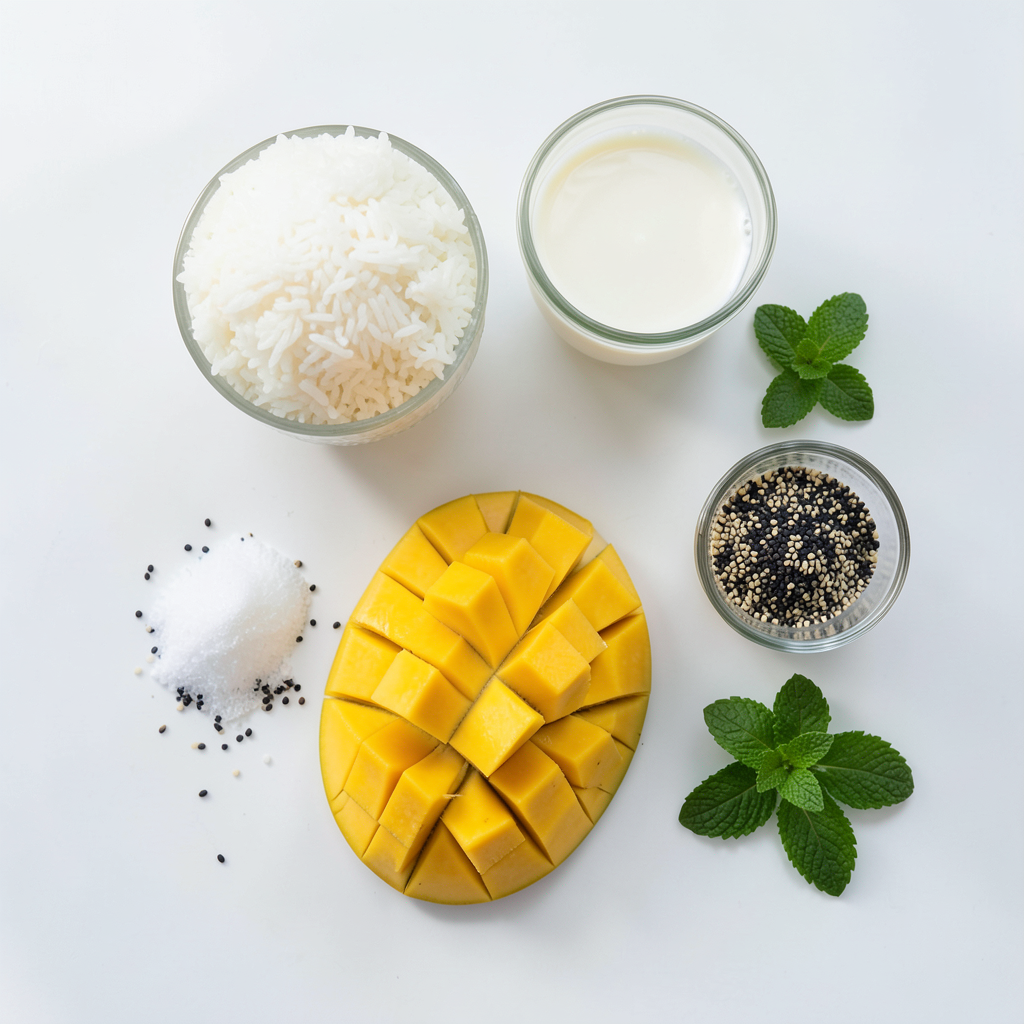
- 1 cup glutinous (sticky) rice
- 1 ½ cups coconut milk
- ½ cup sugar
- ½ teaspoon salt
- 2 ripe mangoes, sliced
- 1 tablespoon sesame seeds (optional)
- Fresh mint leaves for garnish (optional)
Glutinous rice is the star of this dish. It has a chewy texture that pairs well with mango. Coconut milk adds creaminess and flavor. Sugar gives a touch of sweetness. Salt balances the taste. Ripe mangoes are juicy and add freshness to the dish. You can use sesame seeds for crunch. Fresh mint leaves can brighten the dessert.
Ingredient Substitutions
- Alternatives to Glutinous Rice: If you can't find glutinous rice, try jasmine rice. It won't be as sticky, but it still tastes good.
- Dairy-Free Coconut Milk Options: For a dairy-free option, use canned coconut milk. It's rich and creamy, just like the fresh version.
- Natural Sweeteners Instead of Sugar: You can swap sugar for honey or maple syrup. These options add unique flavors to the dish.
These substitutions can make the recipe more flexible. Experiment according to your taste and what's available.
Step-by-Step Instructions
Preparation of Sticky Rice
Rinsing and Soaking the Rice Start by rinsing 1 cup of glutinous rice under cold water. Keep rinsing until the water runs clear. This step removes extra starch, which helps the rice become sticky. After rinsing, soak the rice in water for at least 4 hours. Soaking overnight gives the best results.
Steaming Process and Timing Once the rice has soaked, drain it. Move the rice to a bamboo steamer lined with cheesecloth. Steam over boiling water for about 30 to 40 minutes. You want the rice to be tender and sticky. Keep an eye on the time to ensure it cooks perfectly.
Making the Coconut Sauce
Mixing Ingredients While the rice is steaming, you can make the coconut sauce. In a small saucepan, mix 1 ½ cups of coconut milk, ½ cup of sugar, and ½ teaspoon of salt. Stir well to combine all the ingredients.
Heating Instructions Heat the mixture over medium heat. Watch carefully until the sugar dissolves. Do not let it boil. Set aside about ¼ cup of this sauce for later. This will be drizzled on top when serving.
Combining and Serving
Integrating Sauce with Sticky Rice Once the rice is done, take it out of the steamer. Place the hot rice in a mixing bowl. Pour the remaining coconut sauce over the rice and stir gently. Let the rice sit for about 15 minutes. This helps the rice absorb all the rich flavors.
Serving Suggestions with Mango To serve, scoop a generous amount of sticky rice onto a plate. Place sliced mangoes alongside or on top of the rice. Drizzle the reserved coconut sauce over everything. For a nice touch, sprinkle sesame seeds on top. You can also add fresh mint leaves for garnish. Enjoy this treat with family and friends!
Tips & Tricks
Perfecting the Sticky Rice
- Soaking Duration for Optimal Texture
Soak the glutinous rice for at least 4 hours. Overnight gives the best texture. The longer soak helps the rice cook evenly and become soft.
- Steaming Techniques
Use a bamboo steamer lined with cheesecloth. Steam over boiling water for 30-40 minutes. This method keeps the rice fluffy and sticky. If you don’t have a bamboo steamer, use a metal one. Just make sure to keep the rice covered.
Enhancing Flavor
- Customizing Coconut Sauce
You can adjust the sweetness by adding more or less sugar. Mix the coconut milk, sugar, and salt over medium heat. Heat until the sugar dissolves, but don’t boil it. This creates a rich, creamy sauce that really enhances the dish.
- Extra Garnishing Suggestions
Try sprinkling sesame seeds for crunch. Fresh mint leaves add a nice pop of color and flavor. These little touches make your dessert look and taste amazing.
Serving Ideas
- Plating For Presentation
Use a white plate to show off the colors. Scoop the sticky rice and place it next to the mango slices. Drizzle the reserved coconut sauce over everything. This simple presentation will impress anyone.
- Accompaniments to Consider
Serve with a side of fresh fruit or a scoop of sorbet. This adds variety and freshness to your dessert. You can also serve it with a cup of green tea for a lovely pairing.
Pro Tips
- Soak for Success: Soaking the glutinous rice for at least 4 hours helps to achieve the perfect sticky texture. For optimal results, soak it overnight!
- Steaming Technique: Use a bamboo steamer lined with cheesecloth to ensure even steaming. This prevents the rice from falling through the cracks while allowing steam to circulate.
- Coconut Sauce Balance: Monitor the coconut sauce closely while heating. It's important not to let it boil, as this can alter the texture and flavor of the sauce.
- Garnish for Flair: Don’t skip the sesame seeds and fresh mint leaves! They add a delightful crunch and fresh aroma that elevate the dish's presentation and taste.
Variations
Flavor Variations
You can make Thai mango sticky rice even more fun by adding fruits. Try sliced bananas or fresh strawberries for a twist. The sweetness of these fruits works well with the creamy rice and coconut sauce.
You can also infuse your coconut milk for a unique taste. Add pandan leaves while heating the coconut milk. This gives it a lovely green color and a sweet aroma. You could use a bit of vanilla extract too. It adds a warm, inviting flavor that pairs well with mango.
Dietary Variations
If you want a vegan-friendly version, you’re in luck! The recipe is already vegan. Just ensure your sugar is free from bone char. Most brands are vegan, but check the label to be sure.
For gluten-free options, good news! Glutinous rice is gluten-free. Just make sure all your ingredients, especially sugar and coconut milk, are also gluten-free. This dessert is safe for everyone to enjoy.
Seasonal Variations
In the summer, try using other tropical fruits. Pineapple or kiwi can add a fresh zing to your dessert. These fruits have a bright taste that matches the sticky rice and coconut.
You can also adapt this dish for holidays. For example, during Christmas, add a sprinkle of cinnamon or nutmeg for warmth. This change gives the dessert a festive flavor perfect for the season.
Storage Info
Storing Leftovers
To keep your Thai mango sticky rice fresh, use airtight containers. Glass or plastic containers work well. Store the rice and mango slices separately. This way, they stay fresh longer. In the fridge, your leftovers will last about 2-3 days.
Reheating Instructions
When reheating, I suggest using the microwave. Microwave the rice in short bursts. Add a splash of water to keep it moist. For the best texture, cover it with a damp paper towel. If you want to restore flavor, drizzle on some of the reserved coconut sauce.
Freezing Options
You can freeze sticky rice if you have extra. Place it in a freezer-safe bag. Squeeze out air before sealing. This way, it won’t get freezer burn. It can stay in the freezer for up to a month.
When ready to eat, thaw it in the fridge overnight. For quick thawing, use the microwave on low. After thawing, steam it again for the best texture. Enjoy your delicious Thai dessert!
FAQs
What type of rice is used for Thai Mango Sticky Rice?
You need glutinous rice for this dish. This rice has a sticky texture when cooked. It’s also called sticky rice or sweet rice. You can find it in Asian grocery stores. This rice gives the dessert its signature chewiness.
Can I make this dessert in advance?
Yes, you can prepare this dessert ahead of time. Cook the sticky rice and coconut sauce. Store them separately in the fridge. When you are ready to serve, heat the rice and sauce. Then, add fresh mango slices. This way, the dessert stays fresh and tasty.
How do I ripen mangoes quickly?
To ripen mangoes fast, place them in a paper bag. This traps the ethylene gas they produce. Keep the bag in a warm spot. Check daily for ripeness. You can also add an apple or banana to speed up the process.
Is there a way to make this sugar-free?
Yes, you can make this dish sugar-free. Use a sugar substitute like stevia or monk fruit. Adjust to taste. These alternatives keep the sweetness without extra calories. Just ensure they dissolve well in the coconut sauce.
Can I use canned coconut milk?
Absolutely! Canned coconut milk works great for this recipe. It gives a rich flavor and creamy texture. Make sure to shake the can well before using. This helps mix the thick cream with the liquid.
This article covered the key ingredients and steps to make Thai Mango Sticky Rice. We explored the main components, like glutinous rice and coconut milk, and offered tips for customizing flavors. You learned about storage options and variations for different diets and seasons.
In conclusion, making this dish can be simple and fun. Enjoy experimenting with flavors and presentations. Your perfect Thai Mango Sticky Rice awaits!